
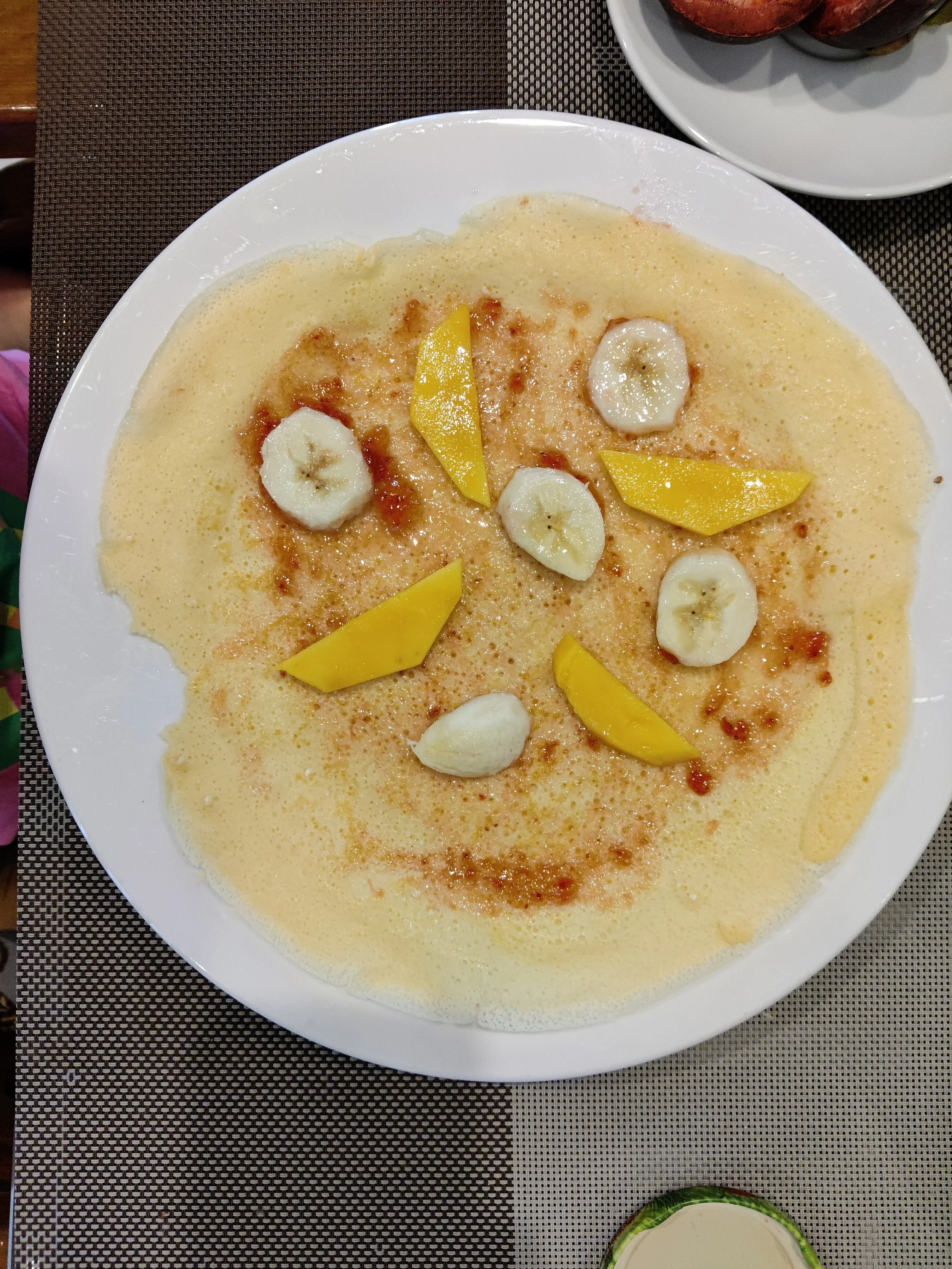
Palatschinke
made in Vietnam!
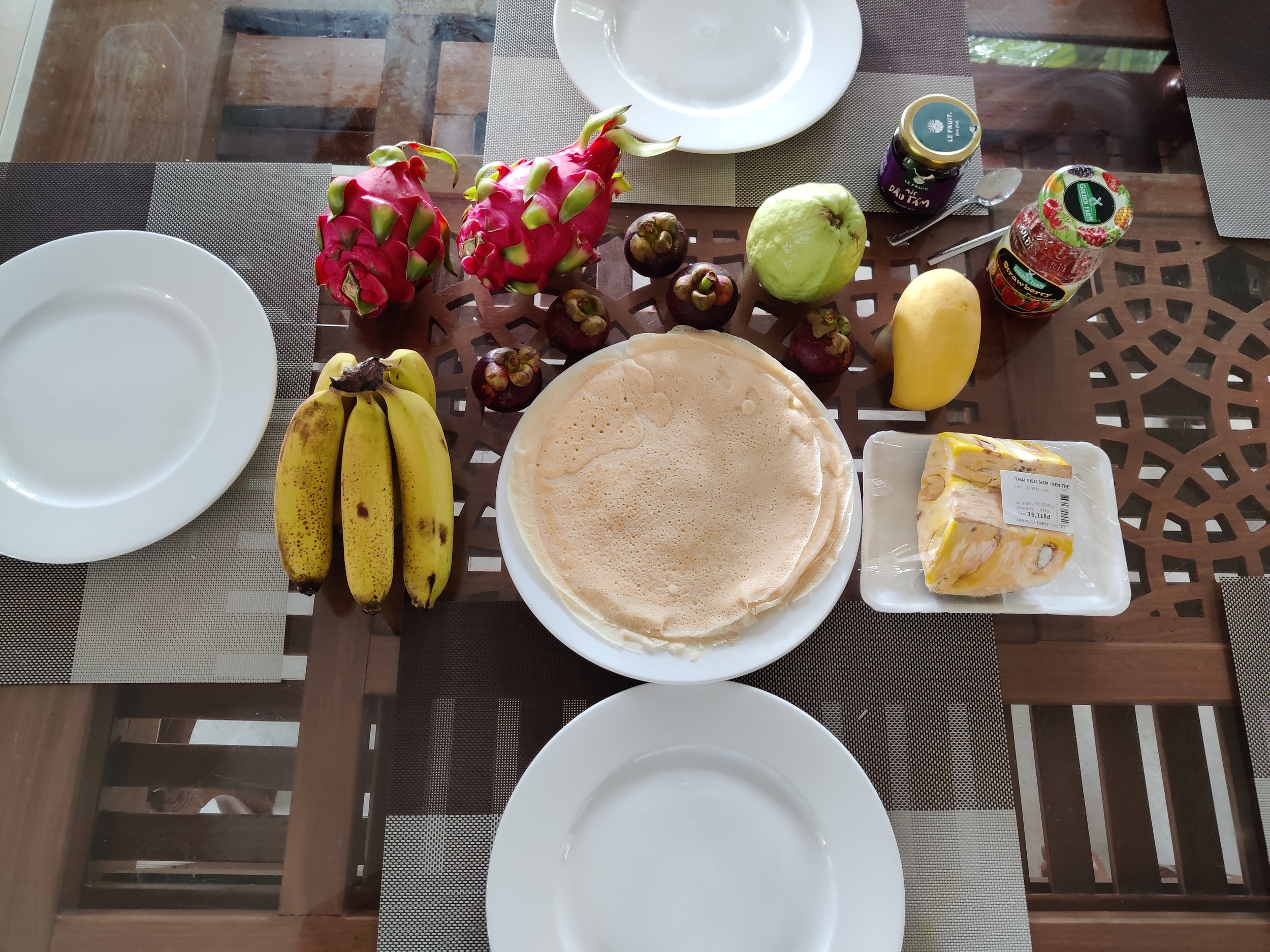
Palatschinke is an austrian pastry usually served with jam for breakfast or dessert. Basically, it is a very thin pancake. If it is unsweetened, it can be cut into strips and put into soup. The combination of traditional preparation with Vietnamese fruit gives the perfect synergy. The quality of the fruit is unique in Vietnam.
Prep Time: 20 minutes
Reciepe by Sebastian Wagner, CFO UAC Vietnam
For the PALATSCHINKE:
Bill of Material (BOM) for 0,5 KG / 3 people
2 Eggs
170 g plain wheat flour
340 ml milk
15g Sugar
1 pinch of salt
1 tablespoon oil (neutral flavour)
Jam, fruits, chocolate, ...
Preparation:
Dump eggs (with or without a shell, depending on calcium deficiency 😉), milk, sugar, and salt into a bowl and mix with a mixer. I weigh the ingredients directly in the bowl. The safe option is to weigh them separately beforehand.
Weigh flour in a second bowl and add slowly. Lumps can form if added too quickly. The dough mixture will become thicker and thicker, which means that the speed of the mixer can be increased continuously. A high-speed causes air to be added and the pancakes become fluffier.
Weigh flour in a second bowl and add slowly. If added too quickly, lumps may form. The dough mixture becomes thicker and thicker, which means that the speed of the mixer can be increased continuously. A high-speed causes air to be added and the pancakes become fluffier.
In the meantime, heat the pan on the stove. I use "7 of 9" on the Ceran cooktop.
Once the pan is hot and the batter mixture is lump-free, you're ready to go.
Lightly brush pan with oil.
Empty enough batter mixture into the pan with the ladle and swirl the pan to distribute the mixture. How much you need is a matter of practice: it should be just enough to completely cover the pan.
When the color has changed from whitish to yellowish, it's time to flip. A Teflon turner is recommended; the brave and the showy can try swirling the pancake through the air.
When the color has changed from whitish to yellowish, it is time to turn. A Teflon turner is recommended, brave and show-offs can try to swirl the pancake through the air.
The second side needs shorter than the first. Remove from the pan at the latest when the edge turns brown and keep warm by means of a lid.
Repeat steps 5-8 until the dough mixture is used up. The last pancake will be either thicker or smaller than the others, depending on how much dough is left at the end.
Spread with jam or top with fruit as desired. Nutella is less recommended. In some places it is served with whipped cream and vanilla ice cream. Ultimately, the palate decides.
CHEF’S Note:
Smaller, larger, thicker, thinner, lighter, darker: each pancake is different, depending on the ingredients, equipment and compliance with the above steps. And do not despair if you do not succeed at first attempt. Practice makes perfect. To keep frustration at bay, here's a troubleshooting guide:
Problem
The first Palatschinke always s*cks!
The Palatschinke rips when turning
The dough solidifies before the whole pan is filled.
Palatschinke is too dry
Kitchenware:
Scale
Bowl (large enough not to spill wenn blending)
Blender
Ladle
Bowl to sprinkle the flour into
Coated pan, should be very shallow
Turner
Small oil bowl
Brush to coat the pan with oil
Plate
Lid
Enjoy!
Reason
Pan is not hot enough
Fried too short or the ratio of egg / flour / milk is not correct
Not the correct ratio of egg / flour / milk. Probably too much flour.
Pan is too hot
Solution
Let the pan get hot, when pouring in the dough it should hiss softly
Fry the first side longer until edge begins to burn brown. If this does not help: mis some flour into the batter. If that does not help either: use larger eggs or one small egg in addition for next time
Add a little milk until the viscosity seems better
Reduce heat